

Case study
How ClimaSens helps Australian Red Cross target humanitarian support during extreme heat events.
Extreme heat is Australia’s deadliest natural hazard, claiming more lives than bushfires, floods or cyclones. As a changing climate makes periods of extreme heat more frequent and severe, it’s not only critical we know who is most impacted, but how can we help them stay safe, cool and connected?
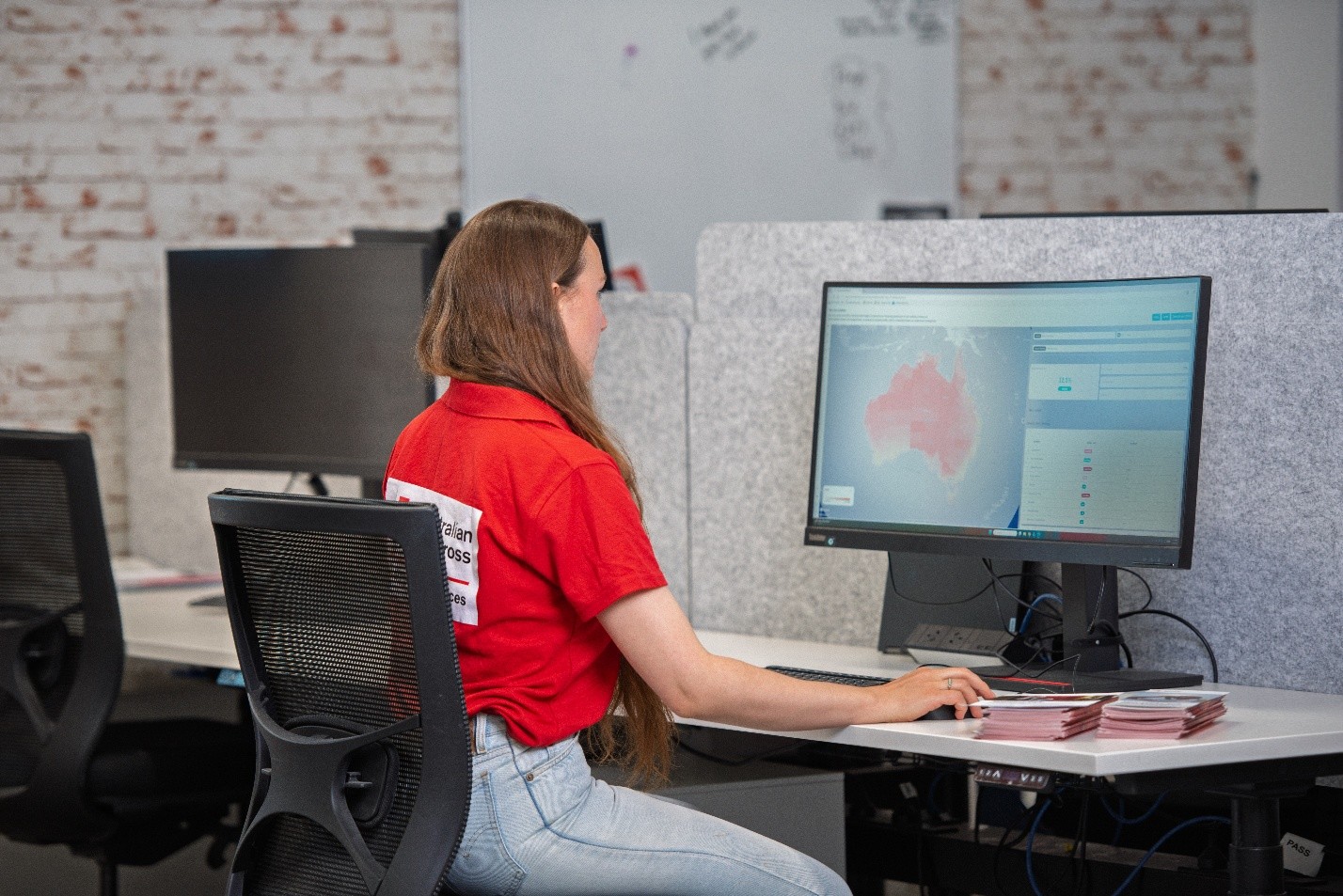
ClimaSens is a climate intelligence platform helping Australian Red Cross combine weather forecasting data with hyper-local demographic insights. The platform shows not just where extreme heat will hit, but which communities are most exposed because of factors like age, isolation or insecure housing. This data-driven approach ensures that humanitarian support is both timely and targeted.
Beginning as a pilot in one local program, use of ClimaSens has since expanded across seven programs at Australian Red Cross.
The first integration of ClimaSens into Australian Red Cross programming began with TeleRedi, a telephone support service for people who may be at heightened risk during extreme heat.
Isolation can intensify during heatwaves, and TeleRedi ensures people are not left alone and without support. Once heat warnings are issued, trained volunteers call to check on wellbeing, give practical advice and connect people to support. Timing is critical, and our focus is on reaching at-risk people early.
Decisions to deploy the TeleRedi service are guided by official state-based emergency service agency heat warnings. These alerts, while essential, cover wide regions without distinguishing between important differences. For example, a neighbourhood of older renters in a heat island may fall under the same alert message as a more affluent suburb a few kilometres away.
ClimaSens adds depth to the existing system. By layering neighbourhood-level heat forecasts with social vulnerability indicators, Australian Red Cross teams can gain a clearer view of risk distribution.
The frequency of extremely hot days in a given location.
A calculation informed by the prevalence of social demographic factors, such as age and housing, within a set location.
The number of people present in areas that could be adversely affected by extreme climate events.
The TeleRedi pilot demonstrated something powerful: when risk becomes visible at the right scale, action becomes clearer and faster. The use of ClimaSens has expanded from one heat-activated service (supporting 250 people in Australia) across seven programs at Australian Red Cross - spanning both emergency response and everyday community support, shaping services for more than 20,000 Australians at risk from extreme heat.
One of the clearest examples is Australian Red Cross Telecross, a daily telephone check-in service. Every morning of the year - 365 days, regardless of the weather - a volunteer calls to check in on the 3,700 clients on our Telecross lists, many of whom experience physical risks, social isolation and a lack of community support.
ClimaSens doesn’t change when or whether these people receive their daily check-in. Instead, it provides context. ClimaSens insights prompt volunteers to incorporate practical heat safety guidance early – staying hydrated, keeping cool, and checking medications before extreme conditions arrive.
This matters because someone’s ability to cope isn’t built in the middle of a crisis - it’s built in the steady, trusted conversations that happen every day, strengthening people’s confidence, awareness and ability to cope when extreme heat arrives.
Not everyone faces extreme heat equally. Urban communities - particularly those experiencing disadvantage, limited access to resources or information and the effects of discrimination - are disproportionately affected.
At Australian Red Cross, the Urban Climate Resilience Program focuses on working alongside communities most exposed to climate risk-, strengthening their ability to prepare for, respond to and recover from extreme heat.
ClimaSens underpins how that work is targeted. From the outset, the Urban Climate Resilience Program used ClimaSens to decide where to focus its work. By triangulating three data layers - heat risk, social vulnerability and population figures - teams can clearly see which Local Government Areas (LGAs) face the most dangerous combination of extreme temperatures and higher concentrations of populations with a limited capacity to cope. ClimaSens brings critical elements together in one place, saving time, maximising resources and strengthening confidence in government that the right areas are being prioritised.
It has also changed the way partnerships begin. When building relationships with councils, teams arrive with evidence: a clear picture of that LGA’s heat risk profile, grounded in data. For some councils, it was the first time they had seen this kind of localised heat risk analysis about their own area.
That credibility matters and makes collaboration tangible. It shifts the conversation from possibility to priority and makes it easier for councils to get on board quickly. In this way, ClimaSens doesn’t just identify need - it accelerates action.
Across both event-based and always-on programs, integrating ClimaSens has shifted how Australian Red Cross thinks about and delivers its extreme heat work in three meaningful ways.
A changing climate is making instances of extreme heat more frequent, more severe and more prolonged. The communities least equipped to cope are often the ones hit hardest by heat. Ultimately, better data leads to better decisions - and better decisions lead to better outcomes for the people who need support most. ClimaSens doesn’t replace human judgement or community knowledge - it strengthens it - helping ensure that when the next heatwave arrives, resilience has been built and support is already on its way.
Extreme heat isn’t going away. But together, we can reduce the risks it brings. As Australian Red Cross scales our work in this space, ClimaSens will be the intelligence that helps us build resilience where it's needed most.
With thanks to QBE Foundation and Telstra Foundation who funded this project.