

Case study
When recovery efforts strengthen the systems that protect people, communities are better prepared to withstand the next disaster.
Mungalla Station, on Nywaigi Country in the Ingham region around 260 kilometres north of Cairns, has experienced repeated flooding in recent years. Each event places increasing pressure on both community and Country.
For the Nywaigi people, who have cared for the Country that Mungalla Station sits on for over 60,000 years, damage to the landscape is felt on an especially deep level. Country is not separate from people – it holds knowledge, lore and identity, and reflects the health of those who belong to it.
The site includes extensive wetlands linked to the Great Barrier Reef, which help filter water, trap sediment and protect reef health. When degraded, these systems lose their ability to protect both local landscapes and downstream ecosystems.
Following severe flooding in 2025, Australian Red Cross delivered a resilience project at Mungalla Station that builds on tried and trusted Caring for Country practices, applied in new ways, to strengthen recovery and reduce future risk.
“The flood, it came very fast, very fast, like I’ve never seen. We’ve lost a lot of personal items, photos that we’re never, ever going to get back. Mungalla has been like a saving grace for me, because I come in every day so my mind doesn’t get worried about where we’re going next.”
The wetlands and waterways at Mungalla Station act as a critical buffer during extreme weather. However, during floods, this buffering capacity can be reduced or overwhelmed, limiting the land’s ability to absorb and slow water, and increasing the risk of damage and disruption to homes, infrastructure and livelihoods.
Planting the right native vegetation helps restore this protective function. Native species suited to local conditions stabilise soils, reduce erosion and slow the movement of water across the landscape. This strengthens the wetlands’ ability to absorb floodwaters and recover after extreme events.
Grounded in both environmental science and Indigenous knowledge systems of Caring for Country, this approach focuses on rebuilding ecosystems so they are better able to withstand future climate shocks, not just recover from past ones.
Humanitech partner AirSeed has a unique product that helps restore damaged landscapes by improving how seedlings establish and survive in challenging environments, supporting both recovery and long‑term resilience.
Rather than relying on standard planting methods, AirSeed uses a biodegradable micropod system that protects young plants during planting and early growth. The pods can be shaped and tailored to suit different landscapes and soil conditions, helping seedlings stay in place and access nutrients, even in flood-affected terrains.
This approach was guided by local knowledge. Australian Red Cross connected AirSeed directly with Nywaigi rangers and Traditional Owners to select the right native species for the site, ensuring planting decisions reflected generations of knowledge about Country, alongside scientific and technical expertise from AirSeed.
In this way, restoration combined Indigenous knowledge systems with modern biotechnology to strengthen both survival rates and long-term ecosystem recovery.
In December 2025, recovery took a practical and collective form at Mungalla Station. More than 80 community members came together on Country for a planting day focused on restoring the flood‑damaged landscape. Working side by side, community planted 2,290 native seedlings across 11 species, supplied by AirSeed, selected to strengthen wetlands and stabilise soils in areas most affected by flooding.
While the full benefits will be seen in the months and years to come, survival rates matter. This is where AirSeed’s products play a critical role. By improving how seedlings establish and endure in difficult conditions, more plants are able to take hold. The soil becomes more stable, wetlands can recover quicker and the land is better able to absorb floodwaters, reducing risk over time.
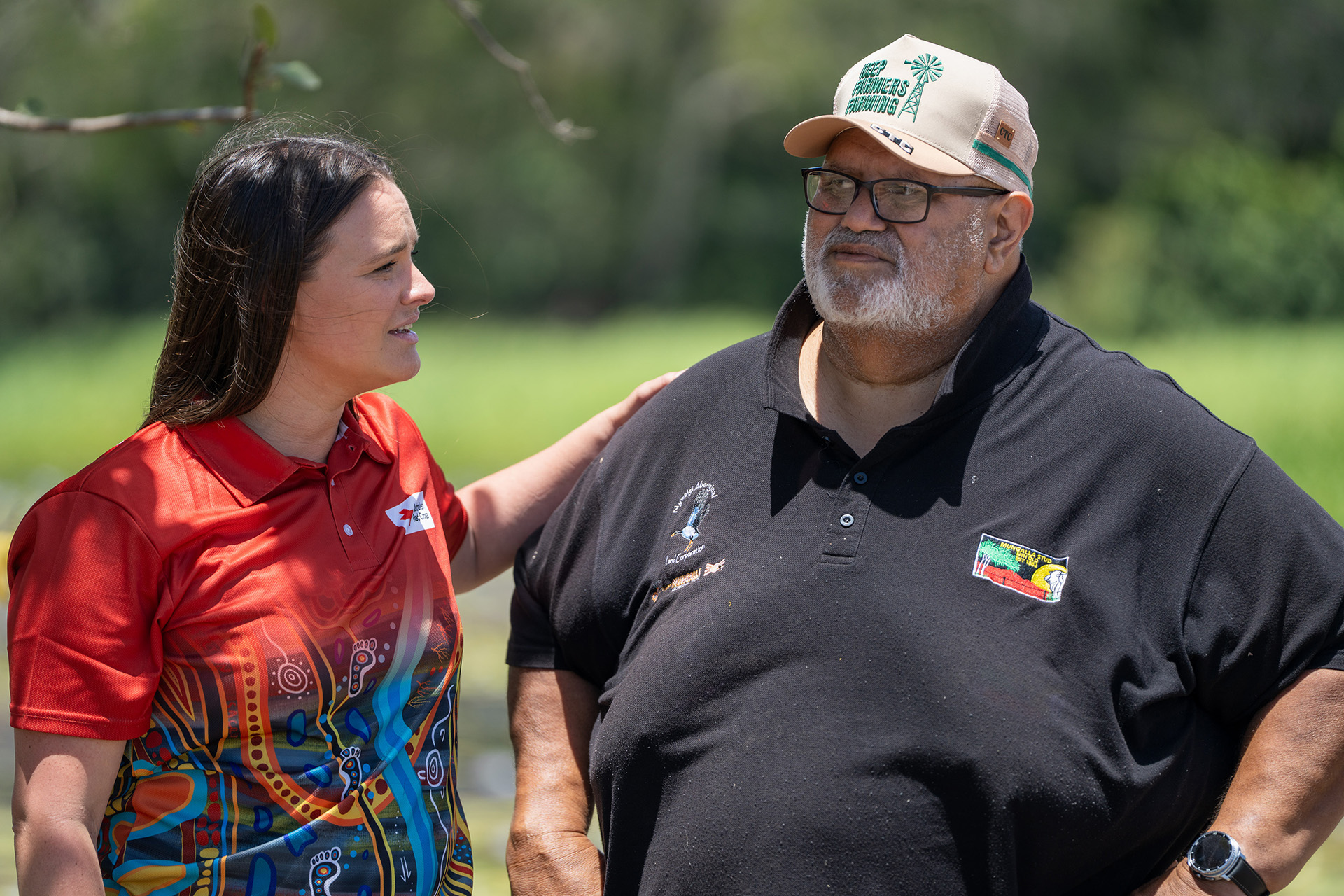
Led by the community and Traditional Owners, the day brought together local residents, Australian Red Cross, Girringun Aboriginal Corporation, Humanitech partner AirSeed, Hinchinbrook Shire Council, and BirdLife Australia, with support from QBE Foundation.
For many, connection to Country and community is an essential part of recovery. Working with the land created space for shared experience and conversation, helping people make sense of what had happened and begin to heal.
Projects like this are only possible through partnership. Recovery at Mungalla Station brought together community leadership, Indigenous knowledge, humanitarian experience, environmental expertise and prevention‑focused investment to realise outcomes that no single organisation could have achieved alone.
Australian Red Cross worked alongside Traditional Owners and the local community, with Girringun Aboriginal Corporation supporting cultural leadership on Country. Through Humanitech, AirSeed was identified and brought in to support recovery in new ways built off historic knowledge.
Local government contributed place‑based expertise and ongoing stewardship, ensuring the work remained grounded in community priorities.
QBE Foundation’s support played a critical enabling role. By investing in recovery that looked beyond immediate repair, their funding created space to focus on prevention and preparedness. This approach recognises that strengthening natural systems, supporting community connection and acting early can reduce the human, social and economic impacts of future disasters.
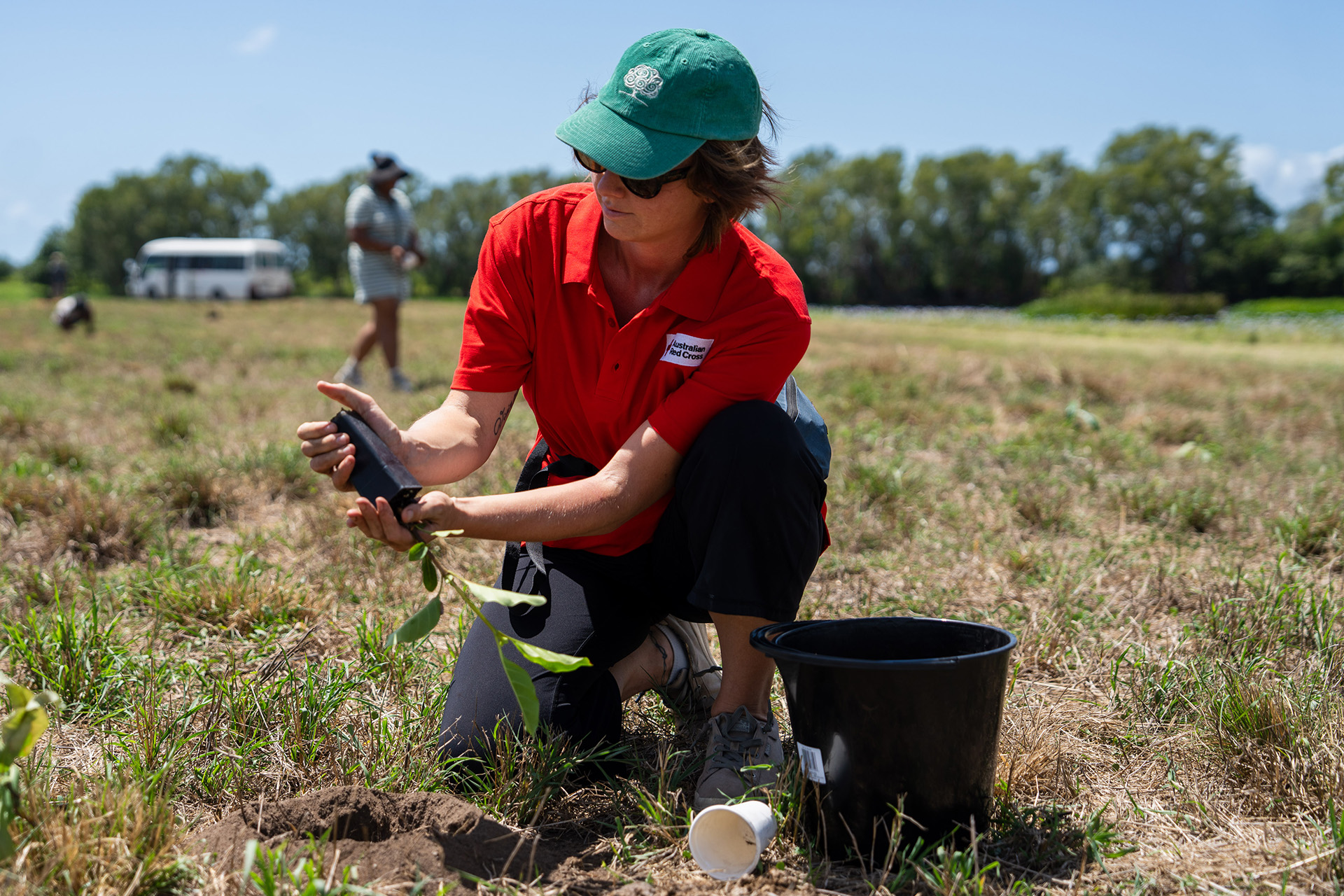
Early activity at Mungalla Station focused on community connection, social recovery and initial restoration.
The planting day brought more than 80 community members together on Country and created a shared space for connection, purpose and active participation in recovery. These moments of collective action matter, strengthening the relationships that communities rely on during future disasters.
As vegetation takes hold, the soil will stabilise and waterways will slow, helping to reduce erosion and future risk. Habitats for wildlife will begin to recover, and water quality improve as vegetation filters runoff and reduces sediment entering connected waterways, including those that flow into the Great Barrier Reef.
Mungalla Station shows how proven approaches can be applied in different ways to meet local needs. In this context, innovation is not about invention, but about combining what already works in ways that can be adapted and scaled to support recovery in other communities.
With thanks to QBE Foundation who funded this project.