

When a disaster strikes, those who prepare in advance are more likely to cope, adapt and recover. But for many communities, information on how to prepare is not always easy to access. This is particularly true for Deaf and hard-of-hearing communities who use Australian Sign Language (Auslan) as a first language.
To explore how preparedness information could be made available in Auslan, Australian Red Cross Humanitech partnered with Kara Technologies (Kara), an organisation developing digital sign language avatars, to test whether emergency preparedness content could be effectively delivered through a digital Auslan interface.
While the long-term ambition of Kara’s work is to explore more accessible communication in emergency settings, the project deliberately began with preparedness information.
Emergency warning environments are high pressure and high risk. Preparedness provided a lower-risk setting to test assumptions, learn with community and refine the approach, before applying it in time-critical contexts.
This sequencing reflects a core principle of responsible innovation: when working in high-stakes environments, testing and learning should happen in ways that minimise risk, while still building capability and evidence.

The project began with what appeared to be a straight-forward assumption: if RediPlanTM, Australian Red Cross’ evidence-based preparedness guide, already helps people prepare for emergencies, then translating that information into Auslan-first videos could extend its accessibility and reach to Deaf and hard-of-hearing communities.
So together, that’s what we did – and the Auslan version of RediPlan was almost ready to be published. Throughout the project, engagement with Deaf communities and collaborators was paramount.
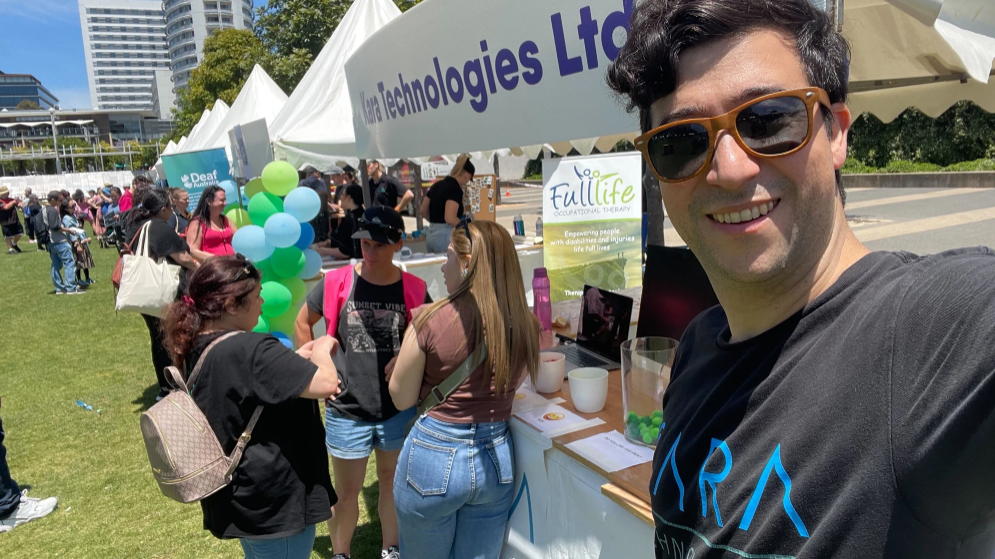
Two distinct forms of feedback emerged in what was thought to be the final check-in with community.
The first related to usability and effectiveness. RediPlan works well as a long-form piece of content, but a direct adaptation of this into Auslan video content didn’t land. The volume of information was overwhelming in video form. Navigation was difficult. Long, continuous content made it hard for users to pick what they needed, go back to information, or move through it at their own pace.
The second related to language accuracy and appropriateness. Early development had relied on transliteration approaches that combined Auslan signs with English sentence structures. This supported initial dataset creation and technical development while the Auslan sign database and avatar technology were still maturing. However, the review process made it clear the approach was not intuitive or appropriate, and at times was outright incorrect.
Together, these findings surfaced an important insight: direct Auslan transliteration did not reliably communicate meaning in practice. Information must be designed around how people actually process, navigate and engage with communication in their first language, rather than adapting content created for written English.
The project team assumed the project was near completion and only subject to minor amends. But community feedback had demonstrated that the original approach was not simply imperfect, but unusable for the audience it was intended to support.
Continuing with the launch as planned would have prioritised delivery over community need. Instead, the team changed direction, in line with our responsible innovation process, grounded in usability and real-world experience rather than completion timelines.
The original content was archived. The updated approach was redesigned around shorter, modular preparedness content that users could navigate, revisit and engage with more flexibly.
How content was developed and validated was also adapted. Rather than relying on transliteration alone, Kara’s technology was used to generate initial draft content, which was then reviewed, refined and validated by an Auslan translation company. Independent review and quality assurance by professional Auslan translators became an essential part of the process to support content accuracy, usability and cultural appropriateness in practice, not just technical translation.
The pivot required significant redevelopment at a late stage of the project. But the alternative — continuing with an approach that community feedback had shown to be ineffective and inappropriate — was not acceptable.
Community feedback played a critical role in identifying shortcomings in the original approach and informing the decision to redesign the content. The redeveloped content subsequently underwent independent Auslan translation review and quality assurance prior to publication.
The experience reinforced that responsible co-design is not about validating an existing solution. It is about remaining willing to change direction when community insight shows something is not working in practice.
The project reinforced a broader insight for Humanitech’s approach to innovation. Responsible innovation is not defined by speed or sticking to a plan. Instead, it is defined by the ability to respond when evidence shows something is not working.
Community-led innovation requires structures, partnerships and funding models that can adapt when lived experience challenges assumptions. This includes accepting that iteration and change are not setbacks, but part of ethical practice.
Across this project, progress came not from protecting the original approach, but from listening closely, testing assumptions and staying focused on what would be genuinely useful for the community.
The project also highlighted the role of trusted collaborators and flexible funding in enabling this way of working. The pivot required additional time, redevelopment and iteration, made possible through the support of QBE Foundation, whose partnership enabled the team to prioritise learning and community outcomes, over rigid delivery against scope, and of Kara, who were equally committed to the share value of getting the output right for community.
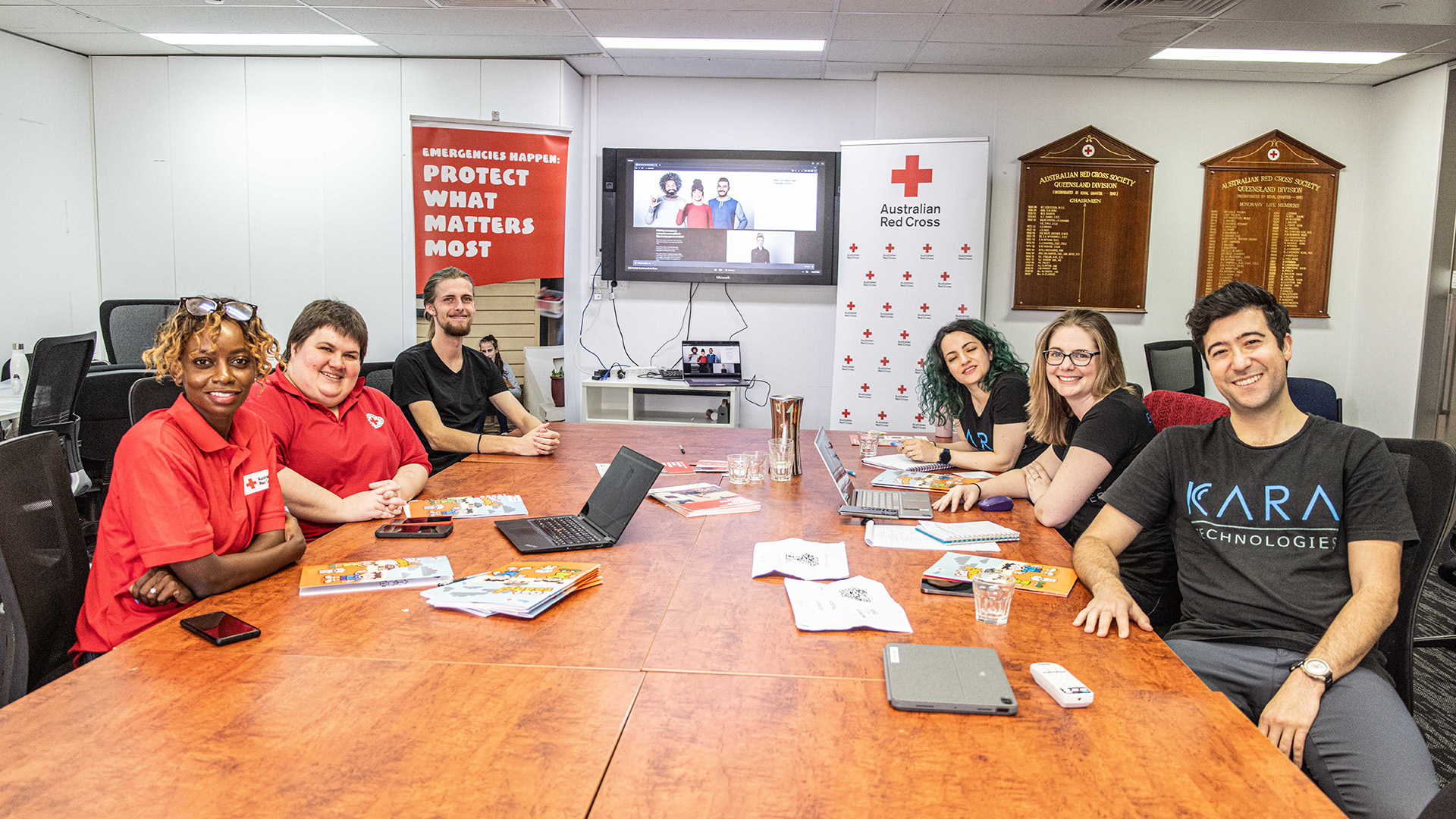
This experience reinforces the value of Humanitech’s approach to innovation.